Best Portable Power Stations UK 2026
Six picks for camping, campervans, van life, home backup, off-grid and power cuts — estimated runtimes, clear comparisons and no marketing fluff. How we choose
Affiliate disclosure: Some links on this page are affiliate links. We may earn a small commission if you buy through them, at no extra cost to you. This doesn't influence our recommendations.
Best pick for each use case
| Use case | Best pick | Why | Link |
|---|---|---|---|
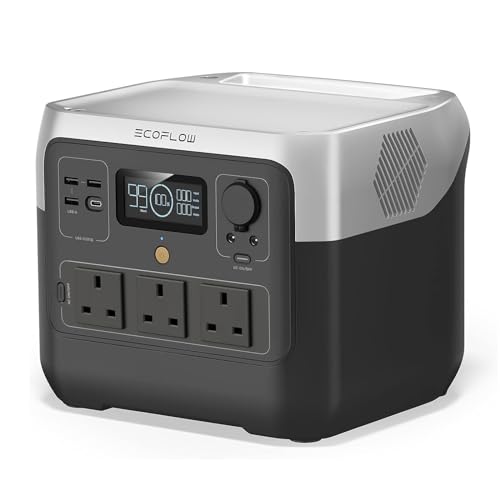
| ⚡ Power cuts | EcoFlow RIVER 2 Pro | 768Wh, 55-min recharge, X-Boost | £499 on Amazon UK |
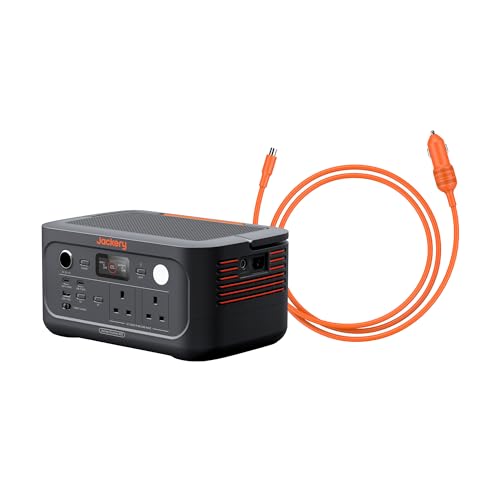
| 🏕 Camping | Jackery Explorer 500 v2 | Light, compact, 4000-cycle LFP | £339 on Amazon UK |
| 🚐 Campervan | Jackery Explorer 1000 v2 | 1070Wh, 3000W surge, runs 12V fridge | £398 on Amazon UK Read our full 1000 v2 review → |
| 🛣 Van life | Anker SOLIX C1000 Gen 2 | 1,024Wh, 3,000W peak, solar-ready | £474 on Amazon UK |
| 🏠 Home backup | FOSSiBOT F2400 | 2048Wh, 2400W, UPS, fridge all day | £649 on Amazon UK |
| 🌱 Off-grid | EcoFlow RIVER 3 Max | 600W (1,200W X-Boost), 10ms UPS, solar-ready | Check price on Amazon UK |
Full comparison table
PCR| Model | Capacity | Output | Surge | Weight | Best for | £ per 100Wh | Link |
|---|---|---|---|---|---|---|---|
| Jackery Explorer 500 v2 | 512 Wh | 500W | 1000W | 5.7kg | Budget / camping | – | £339 on Amazon UK |
| EcoFlow RIVER 2 Pro | 768 Wh | 800W | 1600W | 7.8 kg | Best overall / power cuts | – | £499 on Amazon UK |
| EcoFlow RIVER 3 Max | 572 Wh | 600W | 1,200W boost | 8.4 kg | Off-grid / high output | – | Check price on Amazon UK |
| Jackery Explorer 1000 v2 | 1070 Wh | 1500W | 3000W | 10.4 kg | Campervan / fridge | – | £398 on Amazon UK |
| Anker SOLIX C1000 Gen 2 | 1,024Wh | 2,000W | 3,000W | 11.3kg | Van life / high surge | – | £474 on Amazon UK |
| FOSSiBOT F2400 | 2048 Wh | 2400W | 4800W | 27.0 kg | Home backup / whole-home | – | £649 on Amazon UK |
£ per 100Wh is worked out live from today’s price, so you can compare value across sizes. It ignores output and features, so treat it as one factor, not the verdict.
Prices change frequently on Amazon — tap any Check price button to see today’s price. All available on Amazon UK with Prime delivery.
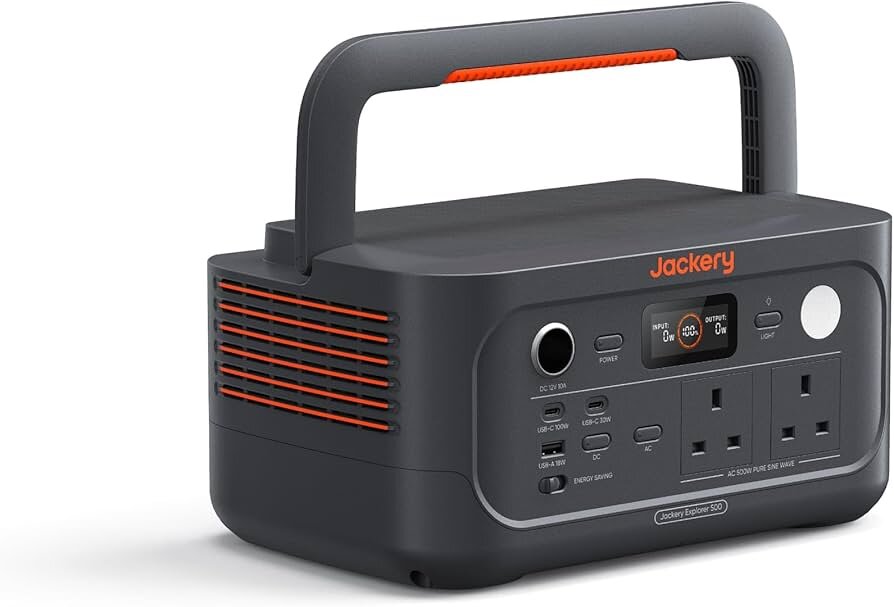
1. Jackery Explorer 500 v2 — Lightest pick
Best budgetThe Explorer 500 v2 is the clearest entry point into backup power for most UK homes. At 512Wh with pure sine wave output, LiFePO4 chemistry and a quiet fan profile, it's compact enough to store in a cupboard and pull out when needed. At 5.7kg it's also the most portable unit on this list — making it equally at home on a campsite as in the hallway. The 500W output limits it — you won't reliably start a fridge compressor — but for Wi‑Fi, phones, a laptop and LED lighting through most UK power cuts or camping weekends, it's hard to beat for the money.
Pros: Lightest unit here at 5.7kg, pure sine wave, LFP rated 4000 cycles, fast USB-C, quiet, great for camping.
Cons: 500W continuous limits fridge use; no pass-through charging; no app connectivity.
£339 on Amazon UK£329–£339 since 6 Sep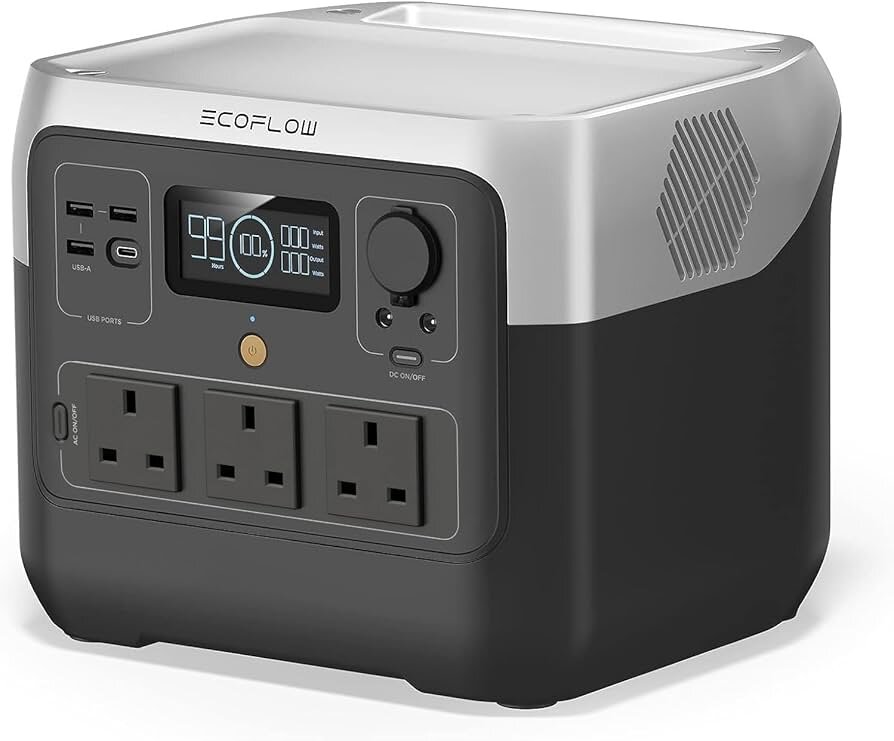
2. EcoFlow RIVER 2 Pro — Best overall
Top pickThe RIVER 2 Pro is consistently one of the strongest all-round power stations on the UK market. The 768Wh capacity comfortably handles a full power cut, the sub-60-minute wall recharge is class-leading, and EcoFlow's X-Boost technology intelligently manages power to appliances that slightly exceed the rated 800W output. It's equally useful for a weekend camping trip, a campervan overnight, or sitting on standby for the next power cut. Our first recommendation for most UK households.
Pros: Fastest wall recharge in this list, X-Boost for borderline appliances, solid EcoFlow app, 3000-cycle LFP, versatile for power cuts and camping.
Cons: X-Boost doesn't genuinely raise output — it manages power intelligently; 800W won't start a large fridge compressor.
£499 on Amazon UK£329–£499 since 6 Sep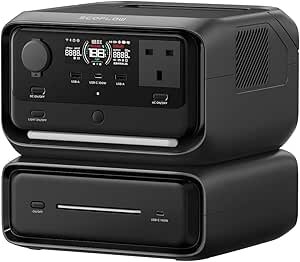
3. EcoFlow RIVER 3 Max — Best budget pick (with 10ms UPS)
Great valueThe RIVER 3 Max pairs 600W continuous output (1,200W via X-Boost) with a 10ms UPS switchover, which makes it a strong compact option for off-grid scenarios — solar panels, remote worksites, or anywhere mains isn't available. It accepts up to 220W solar input, charges quickly from the wall, and has a built-in UPS function (10ms switchover) useful for sensitive electronics. At 572Wh the tank is slightly smaller than the RIVER 2 Pro, but the output-to-price ratio is excellent for off-grid work.
Pros: 10ms UPS switchover, X-Boost to 1,200W, 220W solar input, compact, ideal for off-grid.
Cons: Smaller tank than RIVER 2 Pro; 600W continuous is modest for power-hungry appliances.
Check price on Amazon UKOut of stock on Amazon UK right now. In stock instead: EcoFlow RIVER 2 Pro, 768Wh, a bigger battery – £499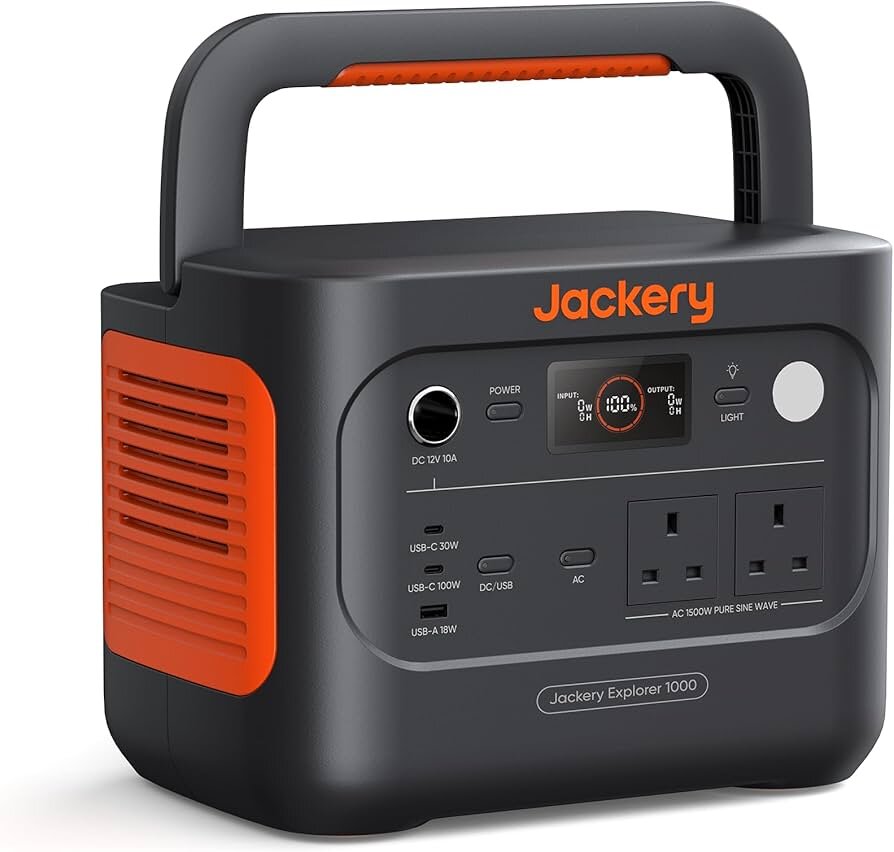
4. Jackery Explorer 1000 v2 — Best for campervans
Campervan pickThe Explorer 1000 v2 is the strongest campervan choice in this guide. At 1070Wh with 1500W output and a 3000W surge rating, it can reliably start a 12V compressor cool box or compact fridge — the core requirement for any campervan or motorhome setup. At 10.4kg it's manageable to move but heavy enough to stay put during travel. The 1-hour fast charge (when using Jackery's app-controlled charging) means you can top it up fully on an electric hook-up pitch before going off-grid overnight.
Pros: 3000W surge handles most fridge compressors, 4000-cycle LFP, 1-hour fast charge, solid Jackery app, great for campervan overnights.
Cons: 10.4kg is noticeable; fast charge requires the app and correct cable; pricier than it used to be.
£398 on Amazon UK£379–£499 since 6 Sep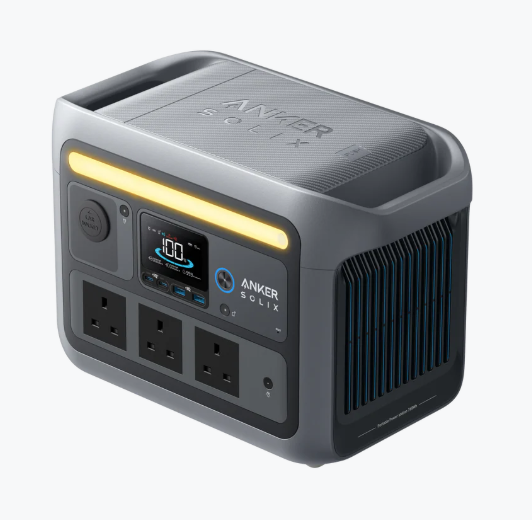
5. Anker SOLIX C1000 Gen 2 — Best for van life
Van life pickThe SOLIX C1000 Gen 2 is one of Anker's strongest compact power stations and a compelling van life choice. Its 3,000W peak rating is exceptionally high for a 1,024Wh unit — meaning it handles high-draw appliances during startup without tripping, even when the tank isn't full. It accepts up to 400W solar input, has Anker's slick app with scheduling and usage tracking, and is built to Anker's usual standard of quality. For van life where solar is your primary recharge source and you need reliability every day, the C800 is a strong investment.
Pros: 2400W surge is outstanding at this price, 400W solar input, solid Anker app, great for solar-dependent van life setups.
Cons: 800W continuous output is modest for the surge rating; heavier than the Jackery 500 v2 at 9.1kg.
£474 on Amazon UK£450–£599 since 6 Sep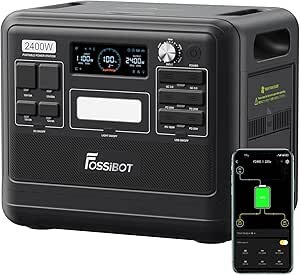
6. FOSSiBOT F2400 — Best for home backup
Home backupIf your goal is genuine whole-home backup — keeping a full-size fridge running for 24+ hours while also charging phones, running lighting, and maybe a TV — the FOSSiBOT F2400 is the step up you need. At 2048Wh with 2400W output and 4800W surge, it can handle essentially everything short of an electric oven or shower. The UPS function (<30ms switchover) keeps sensitive electronics alive seamlessly during a cut. The 27kg weight means it stays put once positioned, but that's fine for a home backup unit that lives under the stairs or in a cupboard.
Pros: Largest capacity here, 4800W surge handles almost any UK appliance, UPS function, fast recharge, best value per Wh.
Cons: 27kg is not portable; FOSSiBOT is a newer brand with less UK track record than Jackery or EcoFlow.
£649 on Amazon UK£609–£649 since 6 SepWhich power station is right for you?
🏕 Best portable power station for camping
Camping puts portability and weight first. You're carrying the unit to a pitch, possibly in a bag or boot, and you don't need to run a fridge — phones, a laptop, a portable speaker, LED lights and maybe a drone are the typical loads.
The Jackery Explorer 500 v2 is the standout camping pick. At 5.7kg it's the lightest unit here, it's compact enough to fit in a large rucksack's front pocket, and 512Wh covers two full nights of charging without breaking a sweat. The LiFePO4 battery handles repeated partial charges (common on campsites) without degrading, and the 4000-cycle rating means it'll last years of weekend use. If you want more headroom for longer trips, the EcoFlow RIVER 2 Pro at 768Wh and 7.8kg is the next step up.
What to power on a typical camping trip: Smartphone ×2 (10W), laptop (45W), LED lantern (5W), drone battery (30W), Bluetooth speaker (5W) — total ~95W. A 512Wh unit covers roughly 4–5 hours of simultaneous use, or two full nights of lighter use spread across the day.
→ See our full camping power station guide
✈ Heading abroad by plane? No power station here meets the 100Wh hand-luggage limit, so for flights pack a flight-safe power bank instead.
🚐 Best portable power station for a campervan
Campervans change the requirements significantly. You're not carrying the unit by hand — it lives in the van — so weight matters less than capacity and surge rating. The critical load for most campervan setups is a 12V compressor cool box or mini fridge, which needs a sustained 40–80W to run but may spike 300–500W on startup.
The Jackery Explorer 1000 v2 is the strongest campervan pick at this price. The 1070Wh tank gives a genuine overnight run of a cool box (at ~50W average, that's 17+ usable hours), and the 3000W surge easily handles compressor startup. The 1-hour fast charge via hook-up is a big advantage — top it up on a pitch before you go off-grid for the night.
For longer trips where you're relying on solar, the FOSSiBOT F2400 (2048Wh) gives twice the tank and handles solar input up to 500W — enough to maintain charge through a reasonably sunny UK summer day even with a fridge running.
Typical campervan overnight load: Compressor cool box (50W avg), USB charging ×2 (20W), LED strip lighting (10W), phone charging (10W) — total ~90W. A 1070Wh unit gives about 9–10 usable hours, covering most overnight stays.
🛣 Best portable power station for van life
Full-time van life is a different category entirely. Your power station isn't backup — it's your only power source. Solar charging becomes essential, daily cycling is the norm, and you need a unit built to take it.
The Anker SOLIX C1000 Gen 2 is our van life pick for a few reasons: the 3,000W peak handles high-draw startup loads even at partial charge, it accepts up to solar input (more than enough for a single roof panel), and Anker's build quality and LFP battery are proven for daily cycling. The app lets you set charging limits and schedules — useful for battery longevity when living off solar.
For longer stints or heavier loads (a proper fridge rather than cool box, or a diesel heater controller), the FOSSiBOT F2400 gives 2048Wh of storage and 500W solar input — the most capable setup in this guide for sustained van life use.
Key van life considerations: Look for maximum solar input (W), not just capacity. A 1000Wh unit with 400W solar input will sustain itself through a UK summer day; one with only 100W solar input won't. Also check the number of charge cycles — LiFePO4 at 3000–4000 cycles means 8–10+ years of daily use.
🏠 Best portable power station for home backup
Home backup is about keeping your household running during a power cut — fridge, Wi-Fi, phone charging, lighting, and ideally a TV. The priorities flip from portable units: capacity and output matter most, weight is irrelevant, and you want the unit sitting ready on standby indefinitely.
The FOSSiBOT F2400 is the clear home backup winner. At 2048Wh it can run an average UK fridge-freezer (150–200W) for 8–10 hours while simultaneously keeping Wi-Fi, phones and lighting on. The 4800W surge handles UK appliance startup loads comfortably. The UPS function (<30ms switchover) means plugged-in devices never notice the cut.
If the F2400 is more than you need, the Jackery Explorer 1000 v2 handles most home cut scenarios at nearly half the weight — it'll run a router, laptop, phone charging and LED lights for 10+ hours, and a compact fridge for 6–8 hours.
Home backup sizing guide: A typical UK household during a power cut needs: router + ONT (20W), fridge (150W avg), phone charging ×4 (40W), laptop (45W), TV (100W) = ~355W total. For an 8-hour cut: 355 × 8 ÷ 0.8 = 3,550Wh. No portable unit covers that fully — but prioritising fridge + Wi-Fi + phones (210W) for 8 hours = 2,100Wh, which the F2400 handles.
→ See our full fridge power cut guide
🌱 Best portable power station for off-grid use
Off-grid covers everything from a remote garden office to a woodland cabin, a construction site without mains power, or a boat mooring. The common thread is that you're relying entirely on stored energy, often replenished by solar, and you need enough output to run tools or appliances — not just phones.
The EcoFlow RIVER 3 Max is the strongest compact off-grid pick. Its 600W continuous output (1,200W via X-Boost) handles smaller tools and appliances and kitchen equipment. It accepts 220W solar input, charges from flat in 1.2 hours from the wall (useful when you do have mains access), and the built-in UPS protects sensitive equipment. For heavier off-grid loads — a full worksite, a cabin with multiple rooms — the FOSSiBOT F2400 at 2048Wh and 2400W output is the more capable option.
Off-grid solar pairing: Match your solar panel wattage to your daily consumption. If you use 400Wh per day (a modest off-grid setup), a 200W panel gives roughly 400–800Wh on a UK summer day (2–4 peak sun hours). In winter, halve that estimate. The RIVER 3 Max accepts 220W solar; the SOLIX C800 accepts 400W; the F2400 accepts 500W.
How to choose the right portable power station
Step 1: Work out what you actually need to power
Before looking at any products, list the devices you'd want running. A typical UK household priority list during a power cut: Wi‑Fi router + ONT (~20W), smartphones (10W each), a laptop (45W), and LED lighting (~15W total). That's roughly 90W — meaning a 500Wh unit gives you 4–5 hours, and a 1000Wh unit gives 8–9 hours. Fridges are a separate conversation (see below). For camping or van life, your list will be similar but may include a cool box or compressor fridge.
Step 2: Calculate the capacity you need
The formula is: required Wh = (total watts × hours needed) ÷ 0.8. The 0.8 accounts for inverter efficiency losses. So if you want to run 90W of devices for 8 hours: 90 × 8 ÷ 0.8 = 900Wh. That points to a 1000Wh unit. For a full guide to this calculation, see our power station sizing guide.
Step 3: Output watts and surge — especially if you want to run a fridge
Capacity is the tank. Output is the engine. Fridge compressors draw 3–6× their running watts for a split second on startup. A unit with a 1500W+ surge rating is your minimum for fridge duty. Units with only 500–800W surge won't reliably start most UK fridge compressors even if the tank is full. For a full analysis, see our fridge guide.
Step 4: Battery chemistry — why LiFePO4 matters
All picks in this guide use LiFePO4 (LFP) chemistry. LFP is thermally stable (no fire risk), rated for 2000–4000 charge cycles (vs ~500 for older NMC batteries), and holds capacity better over time. For van life or campervan use where daily cycling is normal, LFP is essential — NMC batteries would degrade significantly within 2–3 years.
Step 5: Recharge speed and solar input
How quickly can you refill the tank? EcoFlow's 55-minute wall recharge (RIVER 2 Pro) is the current benchmark for home and camping use. For van life and off-grid, solar input is equally important — look for at least 200W max solar input for a single panel, or 400W+ for extended off-grid use. The Anker SOLIX C1000 Gen 2 and FOSSiBOT F2400 (500W) lead here.
A note on indoor safety
Battery power stations are fully safe indoors — no fumes, no emissions, no carbon monoxide. This is fundamentally different from petrol generators, which must never be used inside. LiFePO4 chemistry adds another layer of thermal stability. Keep your unit in a dry, ventilated area away from direct heat sources.
Power station vs petrol generator vs UPS
| Power station | Petrol generator | UPS | |
|---|---|---|---|
| Use indoors | Yes — no fumes | Never — carbon monoxide | Yes |
| Switches over automatically | Only models with a UPS mode | No | Yes, instantly |
| How long it runs | Hours, set by battery size | As long as you have fuel | Minutes to a few hours |
| Noise | Near silent | Loud | Silent (fan on some) |
| Best for | Most UK homes: router, fridge, lights, phones | Long rural outages, outdoors only | Keeping a router or PC up through short cuts |
Just want the Wi-Fi to stay up? A small router UPS can be enough — see our router backup picks.
What not to buy
- Unbranded units quoting huge mAh figures. Capacity for power stations should be stated in Wh. A listing that leads with “60,000mAh” is usually hiding a small battery.
- Modified or “quasi” sine wave inverters. Stick to pure sine wave for fridges, CPAP machines and anything with a motor or sensitive electronics.
- Too little surge for a fridge. Compressors need a big burst to start. Check the fridge’s start-up draw against the station’s surge rating, not just its running watts.
- Older NMC batteries for regular use. LiFePO4 (LFP) typically lasts thousands of cycles; NMC is lighter but wears faster. Every pick above is LFP.
- Anything without a UK plug or UK sockets. Adapters on a mains-output device add a failure point.
Frequently asked questions
Related guides
Best power station for camping UK — picks for every camping style from weekend trips to van life.