Can a portable power station run a fridge? (UK)
Usually yes — but only if you have enough surge power for the compressor and enough Wh to last the outage.
- Running power: many fridges average ~50–150W (but cycle on/off)
- Startup surge: can spike 2–6× briefly
- Rule of thumb: aim for 1000W+ surge if you want fewer trips
Best next step
If you’re buying, start with our top picks.
See top picks (UK)Fridge‑ready picks (3 solid options)
PCRThese have higher surge ratings, which is what usually trips up fridges.
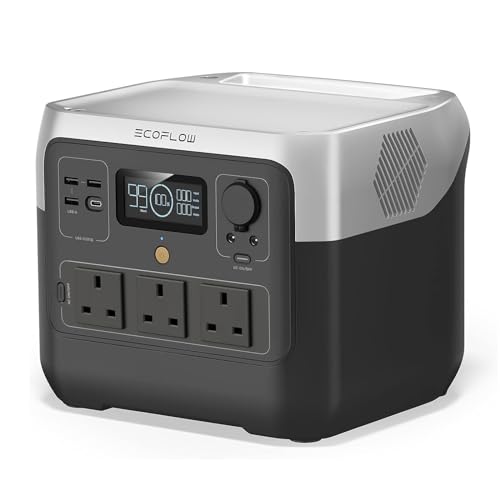
- Good balance of capacity + surge
- Better odds of handling compressor start
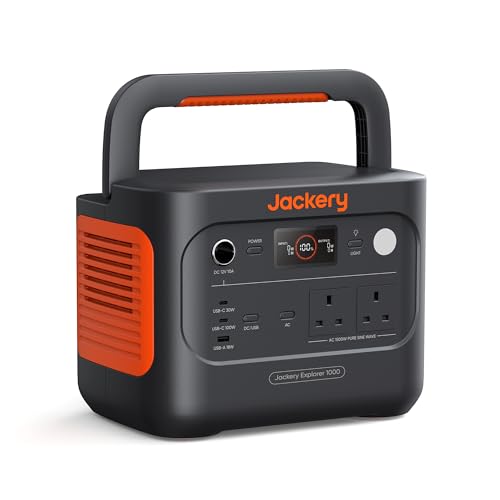
- More headroom for surge + longer runtime
- Better for longer outages
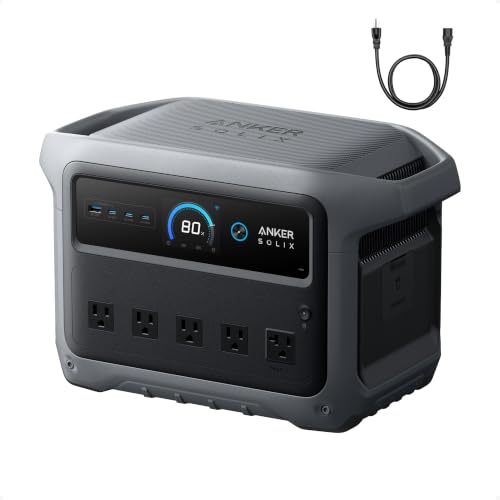
- Very strong inverter headroom
- Best for “I don’t want it to trip” buyers
Tip: If your fridge has a brutal startup surge, even a full battery can trip a weak inverter. Surge rating matters as much as Wh.
Yes — sometimes.
A fridge isn’t a constant load. It cycles on and off. The tricky bit is the startup surge when the compressor kicks in.
This guide helps you avoid the two classic mistakes: 1) buying too small (and it trips), or 2) buying huge “just in case” (and it empties your wallet).
The three numbers that matter
1) Fridge running watts (usually modest)
Many fridges run around 50–150W when the compressor is running.
But it’s not running 100% of the time.
2) Fridge startup surge (can be spicy)
When the compressor starts, it can briefly pull 3–7× the running watts.
That’s why a power station can run: - laptops - lights - routers
…but still face-plant on a fridge.
3) Power station inverter rating (W)
Look for: - continuous output (W) - surge/peak output (W)
If the surge rating is too low, the power station will trip even if the battery is full.
How big a power station do you need?
Output (watts)
As a very rough guide for “typical fridge, typical UK home”: - Aim for 1000W+ continuous output — the Jackery Explorer 1000 v2£450–£599 since 6 Sep (1,500W continuous, 3,000W surge) is the most capable option at this level, or the Anker SOLIX C1000 Gen 2 (1,024Wh, 2,000W continuous, 3,000W peak) for strong surge headroom - And 2000W surge (or better)
Some fridges will work on less. Some won’t. Appliances are like that.
Capacity (Wh)
Capacity determines runtime.
Rule of thumb: - A fridge might average 30–80W over time (because it cycles)
Runtime estimate: - Runtime (hours) ≈ (battery Wh × 0.8) ÷ average W
Examples: - 512Wh → usable ~410Wh - 410Wh ÷ 50W ≈ 8 hours - 1024Wh → usable ~820Wh - 820Wh ÷ 50W ≈ 16 hours
Real life varies with: - how full the fridge is - room temperature - door opening (stop “just checking” — it’s not a pet)
Ways to make it work better (without buying a bigger battery)
1) Don’t run the fridge 24/7
During an outage, many people do “interval cooling”: - run fridge for 30–60 minutes - then off for a while
Keep doors shut and you’ll get more mileage.
2) Cool the fridge before the storm
If you know bad weather is coming: - turn the fridge a bit colder beforehand - freeze ice packs
This gives you thermal buffer.
3) Run essentials separately
If your power station is borderline, don’t also run: - kettle (no) - toaster (absolutely not) - space heater (nice try)
Keep router/phones/lights on it, but be realistic.
Safety notes (quick, non-boring)
- Portable power stations are generally safe indoors.
- Generators are not (carbon monoxide risk). If you’re thinking generator, read: generator vs power station (coming soon)
- Use a proper plug connection — don’t invent new electrical standards in your kitchen.
What to buy
If you want models that are actually plausible for fridges, see:
Next reads
Some links on this page are affiliate links. This means we may earn a commission if you buy through them, at no extra cost to you.
UK fridge wattage: what to expect
Most UK fridge-freezers (A-rated, 200–300 litre) have a running wattage of 50–150W when the compressor is active, but the compressor cycles on and off — it is not running 100% of the time. A well-insulated modern fridge might only run the compressor 30–50% of the time at typical UK room temperatures.
This is why average consumption over an hour is often just 20–60W, even if the label shows a higher peak. The number that matters for your power station is the average watts over time, not the peak running wattage.
Older fridges, American-style fridge-freezers, and wine coolers tend to draw more. If in doubt, a plug-in energy monitor (available for under £15 on Amazon) will give you an accurate reading within minutes.
What is a startup surge and why does it matter?
When a fridge compressor starts from cold, it draws a brief but significant spike of power — typically 2–6 times its running wattage, lasting a fraction of a second. This is called the startup surge or inrush current.
A power station's surge rating (also called peak output) is how much it can deliver in that brief moment. If the surge rating is too low, the power station's inverter detects an overload and cuts out — even if the battery is fully charged. This is the most common reason people find their power station "can't run the fridge."
As a rule of thumb, look for a power station with a surge rating of at least 1,500W for a typical UK fridge-freezer. More headroom is always better — 2,000W+ surge means fewer surprises.
Runtime: realistic expectations by battery size
| Battery capacity | Usable Wh (×0.8) | Est. runtime at 40W avg | Est. runtime at 60W avg |
|---|---|---|---|
| 500Wh | 400Wh | 10 hours | 6.5 hours |
| 768Wh | 614Wh | 15 hours | 10 hours |
| 1,000Wh | 800Wh | 20 hours | 13 hours |
| 1,500Wh | 1,200Wh | 30 hours | 20 hours |
Runtime estimates assume the fridge is the only load. Real-world results vary with ambient temperature, fridge age, and how often the door opens. The 0.8 multiplier accounts for inverter losses.
Fridge vs fridge-freezer: does it change the maths?
A fridge-only unit (no freezer compartment) typically draws less power than a combined fridge-freezer because maintaining 4°C is less demanding than also maintaining −18°C. If you only need to keep food safe (not frozen), a fridge-only or a small fridge is much kinder to your power station budget.
For a chest freezer — which many UK households now use for bulk storage — the startup surge is often lower than a compressor fridge-freezer (chest freezers are more efficient once running) but capacity requirements are higher because you want to maintain −18°C. Size accordingly: aim for at least 1,000Wh for a chest freezer during a short outage.
How long can a fridge stay cold without power?
This is worth knowing before you invest in a large power station. A well-stocked, modern UK fridge can maintain a safe temperature (below 8°C) for approximately 4 hours with the door kept closed. A chest freezer, which is better insulated, can stay frozen for 24–48 hours if packed solidly and left shut.
Practical implications:
- For outages under 4 hours: don't bother powering the fridge at all. Keep the door shut and save your battery for lights, router, and phone charging.
- For outages of 4–12 hours: interval powering (run the fridge for 30 minutes every 2 hours) can stretch a 500Wh battery a long way.
- For outages over 12 hours: a 1,000Wh+ power station running the fridge periodically is the right tool.
Which power stations are most reliable for fridges?
The key specs to look for are:
- Continuous output of 800W+ — enough headroom above the fridge's running wattage
- Surge rating of 1,500W+ — handles compressor startup without tripping
- Pure sine wave inverter — all reputable brands use these; avoid modified sine wave units, which can damage fridge compressor motors over time
- LFP (LiFePO4) battery — safer for prolonged indoor use; all current Jackery and EcoFlow models use LFP
See our full power station roundup for our picks across all budgets, or the under £500 guide for value options that still handle fridge duty.
FAQ
PCRQuick answers to common questions.