Best home backup power station (UK 2026)
A UK power cut takes your heating down with it — the boiler needs mains. The fix is a battery big enough for boiler, fridge, router and lights through a storm night. Here’s the maths, the setup, and the three units we’d trust, tested against real winter loads.
What a UK home actually needs in a power cut
The surprise for most households: it isn’t the big appliances that matter — it’s the small ones that everything depends on. Gas central heating stops working in a power cut, because the boiler’s electronics and the circulation pump need mains — typically only 100–150W between them. Add the fridge-freezer, the router and some lights, and the whole “essential home” runs on under 300W:
| Load | Typical draw | On 2,000Wh (2kWh) |
|---|---|---|
| Gas boiler + pump | 100–150W | 14–20 hours |
| Fridge-freezer | ~50W averaged (cycling) | ~40 hours alone |
| Router + full-fibre ONT | 15–20W | 4+ days alone |
| LED lighting (4 rooms) | ~30W | Days |
| Everything above together | ~230–280W | 7–9 hours |
| Fridge + router only (long outage mode) | ~70W | ~28 hours |
That’s why the 2kWh class is the home-backup sweet spot: heating, food, broadband and light through an overnight storm outage, or a full day-plus in triage mode. The vast majority of UK power cuts are restored well inside those windows — check yours via the DNO lookup.
The picks
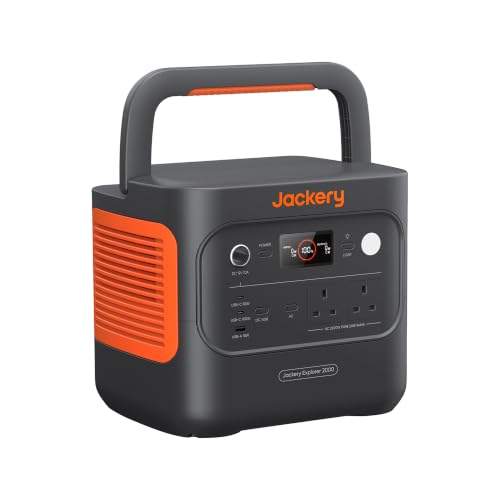
Jackery Explorer 2000 v2
The lightest and most manageable 2kWh unit on the market — genuinely one-person portable, which matters when it lives in a cupboard and comes out in a storm. Its certified 20ms UPS switchover means the boiler, fridge and router can run through it permanently: when the grid drops, they don’t even flicker. Full recharge in 1.7 hours once power returns.
2,200W continuous covers every essential simultaneously with margin for a kettle in rotation. It’s also the quietest of the class — relevant at 3am in a blackout. The trade-off against the EcoFlow below: no capacity expansion and 800W less headline output.
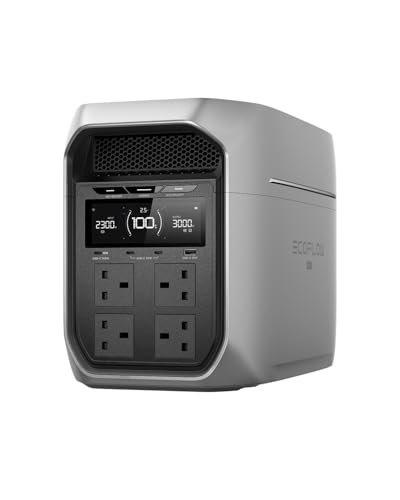
EcoFlow DELTA 3 Max Plus
The whole-home option. 3,000W continuous with a 6,000W surge runs practically anything in a UK house — kettle and microwave together, power tools, even many electric showers’ pumps — and X-Boost stretches it further on resistive loads. 0–80% recharge in 47 minutes is the fastest here.
The headline feature is expansion: chain EcoFlow extra batteries up to 10kWh and this grows from overnight backup into multi-day, near-whole-home resilience — a path the Jackery simply doesn’t offer. You pay for it in weight and price; buy this if you see yourself adding capacity, or your outage risk runs to days rather than hours.
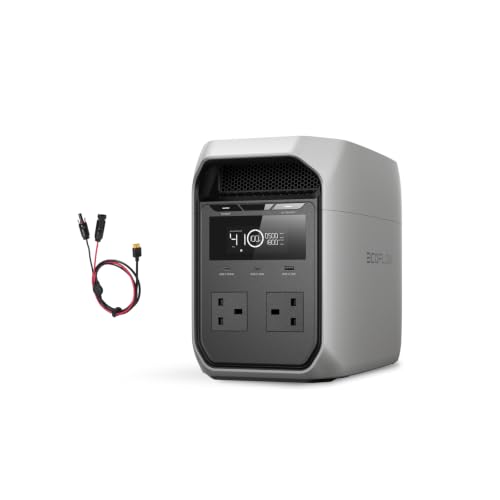
EcoFlow DELTA 3 Classic
Half the battery for a fraction of the outlay — and for shorter outages, half is plenty: boiler + fridge + router for 3–4 hours, or fridge and broadband alone for half a day. The 10ms UPS is actually the fastest on this page, rated for PCs and servers, so a work-from-home desk setup rides through cuts untouched.
1,800W still boils a kettle. This is the right buy if your area’s cuts are the typical UK kind — minutes to a few hours — and the 2kWh class feels like insurance you’d rather not pay for. Pair with our checklist and you’re better prepared than 95% of households.
Keeping the heating on: the practical bit
If your boiler plugs into a socket (many combis do — look under it), you can run it from a power station directly: plug boiler into power station, power station into wall, UPS mode does the rest. If it’s hardwired, a Part P electrician can fit a changeover switch or a fused socket for modest cost — a worthwhile winter job. Never backfeed a power station into house wiring yourself.
Freezer maths for longer cuts: a full, unopened freezer keeps food safe for around 48 hours with no power at all. Battery-backing it isn’t urgent in hour one — prioritise boiler, fridge and router, and rotate the freezer onto power every few hours only if the outage runs long.
Quick comparison
| Model | Capacity | Output | UPS | Expandable | |
|---|---|---|---|---|---|
| Jackery Explorer 2000 v2 | 2,042Wh | 2,200W | 20ms | No | £1,061 on Amazon UK |
| EcoFlow DELTA 3 Max Plus | 2,048Wh | 3,000W | Yes | To 10kWh | £1,399 on Amazon UK |
| EcoFlow DELTA 3 Classic | 1,024Wh | 1,800W | 10ms | No | £499 on Amazon UK |
| Jackery Explorer 1000 v2 | 1,070Wh | 1,500W | ≤20ms | No | £499 on Amazon UK |
Frequently asked questions
Will gas central heating work in a power cut?
No — this is the most common surprise. Gas boilers need mains electricity for their electronics and circulation pump (typically 100–150W total). A power station running just the boiler keeps the heating on for 14–20 hours on a 2kWh unit, which covers the overwhelming majority of UK outages.
What size power station do I need for home backup?
For heating, fridge, router and lights together, the 2kWh class (around 2,000Wh) gives 7–9 hours of everything or a day-plus in triage mode. If your cuts are typically short, a 1kWh unit covering essentials for 3–4 hours costs far less. For multi-day resilience, the expandable EcoFlow DELTA 3 Max Plus can grow to 10kWh.
Can a power station run a fridge and freezer at the same time?
Yes — both together average around 100W once cycling, well within any unit here. A full unopened freezer also holds safe temperatures for about 48 hours unpowered, so in a long cut you can prioritise the fridge and rotate the freezer on periodically.
Is a power station better than a petrol generator for home backup?
For most UK homes, yes: silent, no fumes (safe indoors — generators kill people via carbon monoxide every winter), no fuel storage, instant UPS switchover, and solar rechargeable. A petrol generator only wins for multi-day outages beyond even expanded battery capacity.
Can I connect a power station to my house wiring?
Not directly, and never improvise it — backfeeding endangers engineers working on the lines. Plug appliances into the power station, or have an electrician fit a proper changeover switch for hardwired circuits like a boiler.
How long will a 2kWh power station run a CPAP machine?
A typical CPAP draws 30–60W (more with humidifier heating), so a 2kWh unit runs one for 30–60 hours — several nights. Turn the humidifier off in an outage to stretch it further. It's one of the strongest reasons households keep one charged.
Related guides
- UK power cut checklist — before, during and after an outage
- Battery backup for your wifi router · Can a power station run a fridge?
- Best portable power stations UK · When power stations go on sale
Prices change frequently on Amazon — tap any Check price button to see today’s price. Some links are affiliate links; we may earn a commission at no extra cost to you.